
东方幻想的宇宙:武侠、仙侠与玄幻的终极解析
The Universe of Eastern Fantasy: A Definitive Analysis of Wuxia, Xianxia, and Xuanhuan
在中国庞大的文化娱乐版图中,武侠 (Wuxia)、仙侠 (Xianxia) 与 玄幻 (Xuanhuan) 构成了“东方幻想”的三驾马车。虽然它们在西方常被笼统地归类为“C-Fantasy”或“Cultivation Novels” (修真小说),但这三者在精神内核、力量体系以及哲学隐喻上有着本质的断代与分野。
In the vast landscape of Chinese entertainment, Wuxia, Xianxia, and Xuanhuan form the trinity of "Eastern Fantasy." While often grouped in the West as generic "C-Fantasy" or "Cultivation Novels," they possess distinct spiritual cores, power systems, and philosophical metaphors.
1. 定义与起源:从凡人到神明的阶梯 (Definitions & Origins: The Ladder from Mortal to Divine)
武侠 (Wuxia): 所谓伊人,在水一方 (The Martial Hero)
- 核心定义: “低魔”幻想。它讲述的是在一个虚构的历史背景下,拥有高超武艺的凡人如何通过个人力量践行正义。
- 文化内核: 儒家的“入世”(社会责任)与墨家的“兼爱非攻”。武侠是对腐败官僚体系的一种浪漫主义反叛。
- Definition: "Low Magic" fantasy. It tells the story of mortals with superior martial arts in a pseudo-historical setting, enforcing justice through personal strength.
- Cultural Core: Confucian "worldly responsibility" and Mohist "universal love." Wuxia is a romantic rebellion against corrupt bureaucracy.
仙侠 (Xianxia): 顺天者悲,逆天者仙 (The Immortal Hero)
- 核心定义: “高魔”幻想,植根于中国本土宗教。它融合了武侠的动作与道教的形而上学,关注个人通过修炼(Meditation/Cultivation)脱胎换骨,追求长生。
- 文化内核: 道家的“出世”(超脱自然)与佛家的“因果”。核心冲突往往是“顺应天命”与“我命由我不由天”的矛盾。
- Definition: "High Magic" fantasy rooted in indigenous Chinese religion. It blends Wuxia action with Daoist metaphysics, focusing on personal transformation and the pursuit of immortality through cultivation.
- Cultural Core: Daoist "transcendence" and Buddhist "karma." The central conflict is often between "accepting fate" and "defying the Heavens."
玄幻 (Xuanhuan): 东方皮相,西方骨骼 (The Mysterious Fantasy)
- 核心定义: “超高魔”或“混合”幻想。这是一个大熔炉,它保留了东方的修炼升级模式,但世界观完全架空,可以包含魔法、龙骑士甚至科幻机甲。
- 文化内核: 现代游戏思维与社会达尔文主义。它强调竞争、资源掠夺和绝对力量带来的阶级跃升。
- Definition: "Super High Magic" or "Hybrid" fantasy. A melting pot that retains the Eastern progression system but operates in a completely fabricated world, often including magic, western dragons, or even sci-fi mechs.
- Cultural Core: Modern gaming logic and Social Darwinism. It emphasizes competition, resource acquisition, and social climbing through absolute power.
2. 深度对比:DNA级的区别 (Deep Dive Comparison)
(此表格现已包含完整的双语对照) (This table now includes full bilingual translations)
| 维度 (Dimension) | 武侠 (Wuxia) | 仙侠 (Xianxia) | 玄幻 (Xuanhuan) |
|---|---|---|---|
| 力量来源 (Power Source) | 内力 (Neili/Qi) 源于肉体锻炼与呼吸吐纳,储存于丹田。 (Derived from physical training and breathing exercises, stored in the Dantian.) | 灵力 (Spiritual Power) 源于吸收天地日月的精华,转化为法力。 (Derived from absorbing the essence of nature/heavens, converted into mana/magic.) | 异能 (Unique/Mutated Power) 斗气、魔法元素、血脉之力、魂力,甚至系统外挂。 (Battle Qi, magic elements, bloodlines, soul power, or even "System" cheats.) |
| 战斗表现 (Combat Style) | 技击 (Martial Arts) 刀光剑影,轻功,点穴。物理法则基本适用。 (Swordplay, Qinggong/Lightness skill, acupoints. Physics mostly apply.) | 法术 (Spells/Sorcery) 御剑飞行,法宝轰炸,移山填海。物理法则失效。 (Flying on swords, magical artifacts, moving mountains. Physics do not apply.) | 视效 (Visual Spectacle) 召唤兽,能量波,空间撕裂,数值对撞。 (Summoned beasts, energy beams, tearing space, numerical stat battles.) |
| 最高成就 (Ultimate Goal) | 一代宗师 (Grandmaster) 成为武林盟主或归隐田园,精神上的圆满。 (Martial Alliance Leader or hermit retreat; spiritual fulfillment.) | 飞升成仙 (Ascension) 脱离凡胎,与天地同寿,位列仙班。 (Transcending mortality, eternal life, joining the celestial pantheon.) | 独断万古 (Dominator) 成为创世神或宇宙主宰,改写世界规则。 (Becoming a Creator God or Universe Master; rewriting the laws of reality.) |
| 情感基调 (Emotional Tone) | 悲壮与苍凉 (Tragic & Heroic) 英雄往往无法改变时代的洪流(如乔峰)。 (Heroes often cannot change the tide of history; emphasis on sacrifice.) | 唯美与宿命 (Ethereal & Fated) 跨越千年的爱恋,三生三世的纠葛。 (Romance spanning millenniums; cycles of reincarnation and karma.) | 热血与爽快 (Hype & Catharsis) 莫欺少年穷,一路打脸逆袭的快感。 (Don't bully the poor youth; the thrill of revenge and zero-to-hero success.) |
3. 核心隐喻与世界观构成 (Core Metaphors & World Building)
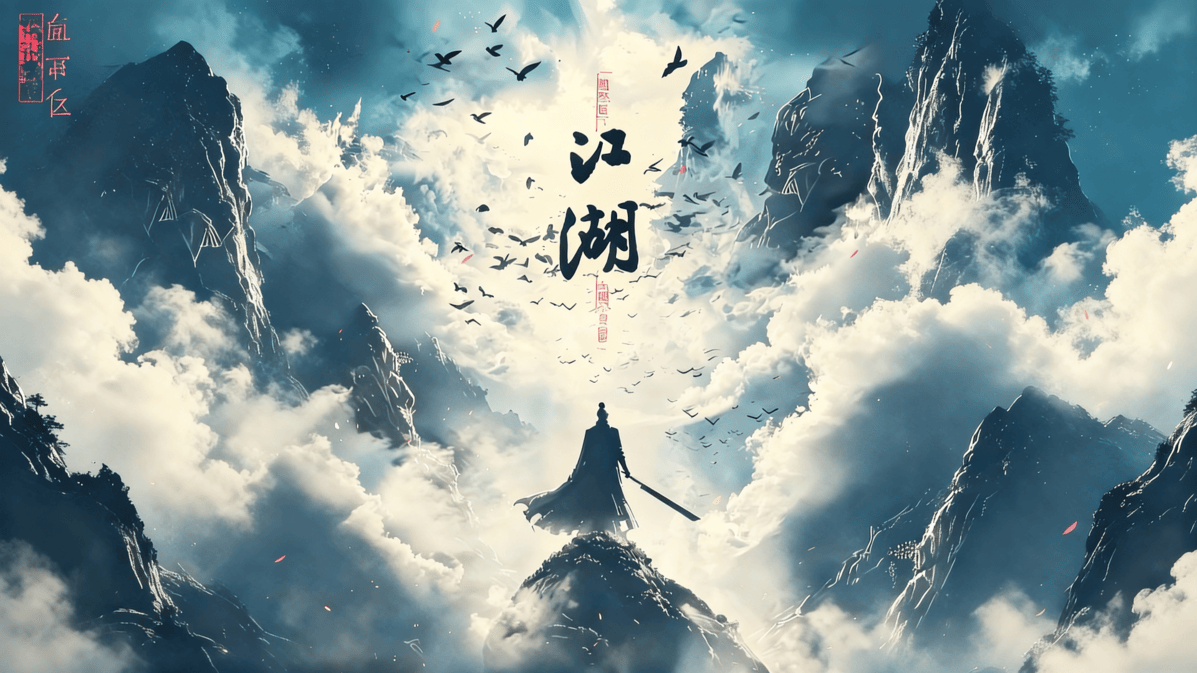
A. 江湖 (The Jianghu): 武侠的社会学
- 解析: 江湖不仅仅是“江河湖海”,它是独立于朝廷法度之外的地下社会。在这里,法律失效,唯一的货币是“信义”和“名声”。
- Analysis: Jianghu is not just "rivers and lakes"; it is an underground society parallel to the imperial court. Here, imperial laws are void; the only currencies are "honor" and "reputation."
B. 逆天 (Defying the Heavens): 仙侠的哲学
- 解析: 仙侠的核心在于反抗宿命。修仙本就是逆天而行,因此天道会降下“雷劫” (Lightning Tribulation) 来毁灭修炼者。这隐喻了人类通过意志战胜自然规律的渴望。
- Analysis: The core of Xianxia is rebellion against fate. Cultivation is an act against the natural order, so the Dao sends "Tribulations" to destroy the cultivator. This metaphorizes humanity's desire to conquer nature through sheer will.
C. 升级流 (The Progression Loop): 玄幻的经济学
- 解析: 玄幻深受网络游戏影响。世界被量化为严格的等级(如:斗者→斗师→大斗师)。这反映了现代社会对阶层固化的焦虑,读者通过主角的快速升级获得打破阶壁的心理补偿。
- Analysis: Heavily influenced by video games. The world is quantified into strict tiers. This reflects modern anxiety about social stratification; readers gain psychological compensation through the protagonist's rapid ascent up the social ladder.
4. 性别视角:男频与女频的差异 (Gender Perspectives: Male vs. Female Demographics)
在中国网络文学(Webnovels)中,流派根据受众有着巨大的分野:
男频 (Male-Targeted): 征服与力量 (Conquest & Power)
- 侧重: 玄幻与传统仙侠(凡人流)。
- 主题: “莫欺少年穷” (Don't bully the poor youth)。主角通常出身低微,被羞辱后获得“金手指” (Cheat/Golden Finger),开启复仇与征服之路,建立后宫 (Harem) 或成就霸业。
- Focus: Xuanhuan and Traditional Xianxia (Mortal Cultivation).
- Theme: Protagonists start weak, endure humiliation, gain a "Cheat," and embark on a path of revenge and conquest.
女频 (Female-Targeted): 情感与纠葛 (Emotion & Intimacy)
- 侧重: 古言 (Ancient Romance) 与 仙侠言情 (Romantic Xianxia / Danmei).
- 主题: 重点不在于修练等级,而在于几世轮回的虐恋 (Angst)。例如《三生三世十里桃花》或《陈情令》。这里的神仙往往不需要修炼,生来就是高贵的上神,故事聚焦于神界的权力斗争与爱情。
- Focus: Ancient Romance and Romantic Xianxia.
- Theme: Focuses less on cultivation tiers and more on reincarnated tragic romance. Gods are often born, not made, and the story revolves around celestial politics and emotional entanglements.
5. 全球化影响与“Cultivation”亚文化 (Global Impact & The "Cultivation" Subculture)
-
Wuxiaworld 与术语标准化 (Standardization): 随着 Wuxiaworld 等翻译站点的兴起,英语世界诞生了专门的术语体系:
- Dao (道): The Way / The Path.
- Qi Deviation (走火入魔): Cultivation going wrong, leading to internal damage or madness.
- Face (面子): Reputation and social standing (crucial in Xuanhuan conflicts).
- Young Master (富二代/宗门少爷): The arrogant, wealthy antagonist who courts death.
-
西方读者的共鸣 (Western Resonance): 西方读者(尤其是喜爱RPG游戏的群体)对“修仙”体系不仅视为文学,更视为一种文字版的“暗黑破坏神” (Diablo) 或“魔兽世界”。这种直观的变强反馈机制(Progression Fantasy)填补了西方奇幻文学中“魔法成长过程模糊”的空白。
- Insight: Western fans view Cultivation as a text-based RPG. The explicit feedback loop of getting stronger fills a gap in Western fantasy where magic progression is often vague or soft.
6. 终极比喻 (The Ultimate Analogy)
为了彻底厘清这三者,我们可以想象面对一座无法逾越的高山:
- 武侠 (Wuxia) 是一个凡人,他苦练攀岩技巧,历经磨难爬上山顶,在那里他在石头上刻下正义的誓言。——证明人类的意志 (Human Will)。
- Analogy: A mortal trains hard to climb the mountain. At the peak, he carves a vow of justice.
- 仙侠 (Xianxia) 是一个修道者,他在山脚下打坐,直到他能御风而行,直接飞越山顶,去往云端之上的天宫。——追求生命的超脱 (Transcendence)。
- Analogy: A cultivator meditates until he can ride the wind, flying over the mountain to the celestial palaces above.
- 玄幻 (Xuanhuan) 是一个穿越者,他直接把山炸平了,或者召唤出一头巨龙骑在胯下,他不在乎山,他只在乎“我是最强的”。——追求绝对的力量 (Absolute Power)。
- Analogy: A transmigrator blows up the mountain or summons a dragon to ride. He doesn't care about the mountain; he only cares that "I am the strongest."